Understanding Total Hip Replacement
Total hip replacement (total hip arthroplasty) is a surgical procedure that removes the damaged ball (femoral head) and socket (acetabulum) and replaces them with prosthetic components, eliminating bone-on-bone friction and restoring hip function. At Precision Orthopedics & Sports Medicine, our fellowship-trained surgeons serving Maryland and the DC Metro Area offer both anterior and posterior surgical approaches and use ROSA robotic-assisted technology for enhanced precision. Learn more about our full range of joint replacement services.
Is Hip Replacement Right for You?
Signs You May Need a Hip Replacement
- Hip pain that wakes you at night or prevents restful sleep
- Difficulty putting on shoes or socks due to limited range of motion
- Limping or an altered gait that worsens over time
- Pain that radiates down the thigh toward the knee
- Inability to walk comfortably for more than short distances
- Failure to improve with medications, injections, or physical therapy
Anterior vs. Posterior Approach
Anterior Approach for Hip Replacement
Accesses the hip joint from the front, working between muscles rather than cutting through them.
- Muscle-sparing technique
- May allow faster early recovery
- Reduced hip precautions after surgery
- Same-day or next-day discharge for most patients
Posterior Approach for Hip Replacement
Accesses the hip joint from the back, providing excellent visualization for complex anatomy.
- Well-established, time-tested approach
- Excellent for revision and complex cases
- Outstanding long-term implant survival
- Broader implant options available
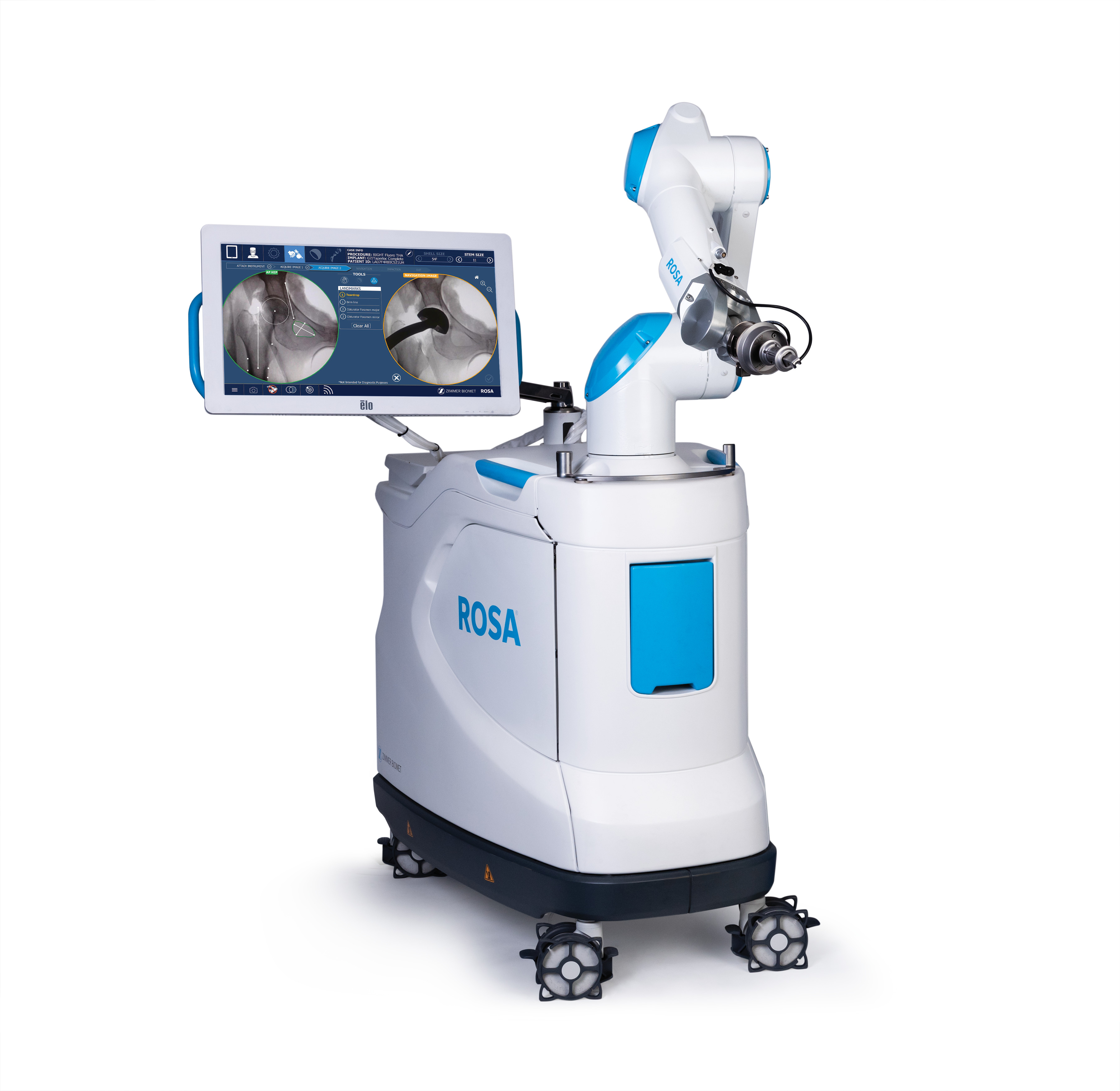
ROSA Robotic-Assisted Hip Replacement
FDA-cleared robotic platform by Zimmer Biomet — used for total hip replacement
Pre-Operative Planning
Your surgeon creates a patient-specific 3D model of your hip using advanced imaging, planning cup angle, stem position, and leg length before surgery begins.
Real-Time Guidance
During surgery, ROSA tracks your anatomy in real time and guides the surgeon to execute precise bone preparation and acetabular cup placement.
Leg-Length Balance
ROSA provides real-time measurements to help the surgeon achieve equal leg lengths and optimal hip stability — reducing the risk of post-operative limping.
Precise, Lasting Results
Robotic precision leads to more consistent component positioning, reduced risk of dislocation, and supports a faster return to your active lifestyle.
Self-Pay Total Hip Replacement Package
We offer a transparent, all-inclusive self-pay package for total hip replacement. The package includes your Precision surgeon's fee, the surgical facility fee, the anesthesia fee, the cost of the implant, ROSA robot fee (if applicable), and initial post-op visits in our clinic and physical therapy offices. These cases are performed at Charles Regional Surgical Center. This facility is an outpatient surgical facility and your surgeon will evaluate if your surgical case is appropriate for outpatient.
The package price is $25,000, with that amount due at the time of scheduling.
Frequently Asked Questions
- Day of surgery: Walking with assistance from a physical therapist
- 1 to 2 weeks: Home exercises and outpatient physical therapy begin
- 2 to 4 weeks: Driving typically resumes; walking with decreased reliance on assistive devices
- 6 to 8 weeks: Return to most daily activities and light work
- 6 to 12 months: Full recovery; return to low-impact recreational activities